Do Blue Poppies Come Back Every Year?
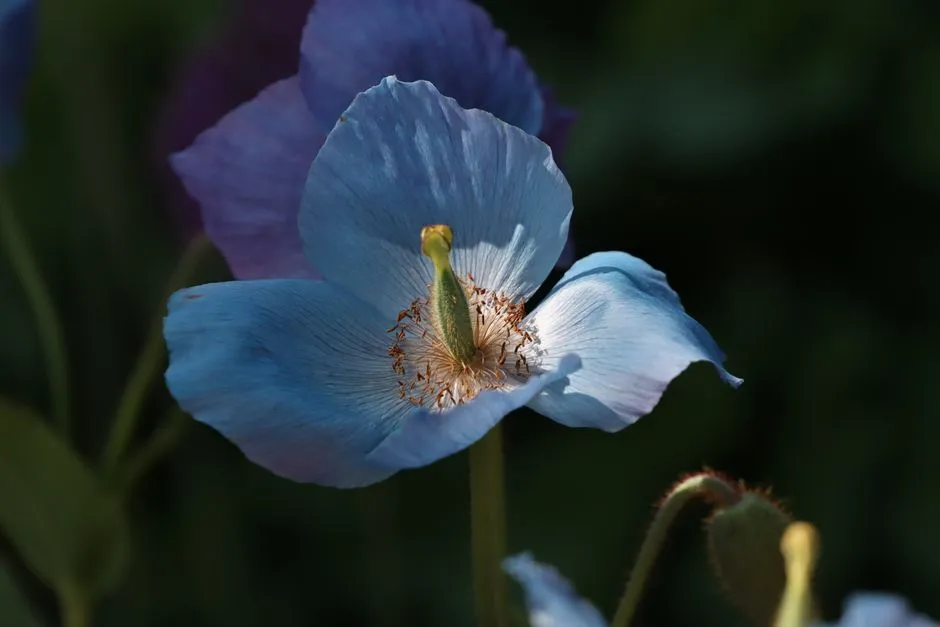
- Do Himalayan blue poppies come back every year?
- What do perennial, monocarpic and deciduous mean?
- Which named plants illustrate the difference?
- Does a returning clump prove that the conditions are right?
- How can you tell what actually returned?
- What safety boundary applies while identifying plants?
- Frequently asked questions
- Sources
Do Himalayan blue poppies come back every year?
Some Meconopsis can return after flowering; others are monocarpic and flower once before dying. Identify the species or named cultivar before expecting annual flowers. Short-lived perennial does not mean permanent, and infertility does not guarantee survival. Keep the label and ask a qualified grower about local performance. These are ornamentals, not food: prevent child and pet ingestion and seek immediate medical or veterinary advice after suspected harmful exposure.
A blue flower tells you less about next year than a complete plant label. Our blue-poppy care collection starts with that distinction.
What do perennial, monocarpic and deciduous mean?
These words answer different questions. The RHS gardening glossary defines a perennial as living for at least three years; deciduous describes seasonal leaf shedding. Neither term, by itself, promises an annual display.
Monocarpic describes a plant that flowers once and then dies. The RHS Meconopsis guide includes monocarpic perennials: a plant can spend several years growing before that single flowering episode. “Perennial” and “monocarpic” are therefore not opposites.
Short-lived is also important. It prevents an unrealistic expectation of permanence without supplying a fixed expiry date for your individual plant.
Which named plants illustrate the difference?
Read the individual description, not just the genus paragraph repeated on a plant database page.
| Named plant | What the RHS description establishes | What not to infer |
|---|---|---|
| Meconopsis (Fertile Blue Group) 'Lingholm' | Short-lived perennial; propagation by seed or division | A guaranteed number of returning seasons |
| Meconopsis (Infertile Blue Group) 'Slieve Donard' | Short-lived perennial; decorative capsules contain no viable seed | Infertility makes the plant permanent |
| M. napaulensis | Monocarpic; described as growing foliage for two or three years before flowering | Every plant sold under this name has a verified identity |
The first two entries use the individual RHS profiles for 'Lingholm' and 'Slieve Donard'. The general growing guide supplies the third and warns that cultivated plants and offered seed under that name are likely to be hybrids. That example concerns the wider genus, not a promise that every Meconopsis has blue flowers.
Does a returning clump prove that the conditions are right?
It is useful evidence, not a complete assessment. Royal Botanic Garden Edinburgh's practical guide describes its cool, rainy Scottish conditions and the importance of shelter and avoiding drying out. It describes autumn dieback and spring emergence within that cultivation context.
Those seasonal observations are not dates to copy into every climate. For site preparation, use the Himalayan blue-poppy growing guide. A winter-hardiness description does not supply a summer watering plan.
Do not diagnose a plant from one brown leaf. Compare the exact taxon's expected seasonal behaviour with the history of the actual plant. Ask a local qualified grower when the pattern is unclear; our garden troubleshooting collection helps organize the questions.
How can you tell what actually returned?
Use a simple observation record. This is our editorial method, not a tested survival protocol.
| Record separately | Example of a useful entry |
|---|---|
| Identity | Name copied from the original label; uncertainty retained |
| Position | A labelled bed sketch or fixed-view photograph |
| Growth | Date shoots were first observed |
| Flowers | Date flowering was observed, or “none observed” |
| Change | New nearby seedling, moved division or replacement purchase |
Keep a replacement plant as a new record. Otherwise “the blue poppies returned” can blur the distinction between the same established clump and a succession of different plants.
What safety boundary applies while identifying plants?
Do not ingest these ornamentals. Keep plants and discarded material away from children and pets. RHS plant-safety advice recommends gloves and covered skin for pruning or weeding. If a person may have eaten a doubtful plant, obtain immediate medical advice; the UK guidance directs people to Accident & Emergency. Do not induce vomiting. Seek veterinary advice for suspected poisonous-plant ingestion by an animal. Identification research must not delay care.
Frequently asked questions
Does perennial mean a blue poppy will flower every year?
No. Perennial describes a plant's potential lifespan, not a flowering contract for your garden. Check the exact name and distinguish survival from flowering. Record actual growth and blooms separately; a plant returning without flowers is a different observation from an empty planting position or an unidentified replacement seedling.
Is an infertile blue poppy unable to flower?
No. The RHS description of 'Slieve Donard' includes blue flowers but says its capsules contain no viable seed. Infertility here concerns seed production, not the presence of flowers. Its profile lists propagation by division; a packet offered under that name needs clarification from the seller before you rely on it.
Can I assume brown leaves mean the plant has died?
No. Leaf loss alone does not establish whether the whole plant is dead. Deciduous plants shed foliage seasonally, but a named plant still needs conditions appropriate to it. Keep dated observations and ask a qualified grower to assess uncertainty rather than pulling up a crown solely because leaves disappeared.
Will deadheading make every Meconopsis live longer?
No universal survival promise is established here. First confirm the plant's identity and ask for advice specific to it, including whether seed collection is appropriate. Do not treat flower removal as a way to convert every life cycle into a permanent perennial or as a substitute for suitable growing conditions.
What should I record if I have lost the plant label?
Record the name you were given, supplier, acquisition date, planting position and dated photographs. Mark the identity as unconfirmed instead of choosing a cultivar from flower colour. Ask the supplier or a qualified horticulturist for help. Do not taste ornamental material or allow children or animals access during identification.