How to Grow Himalayan Blue Poppies in Cool Gardens
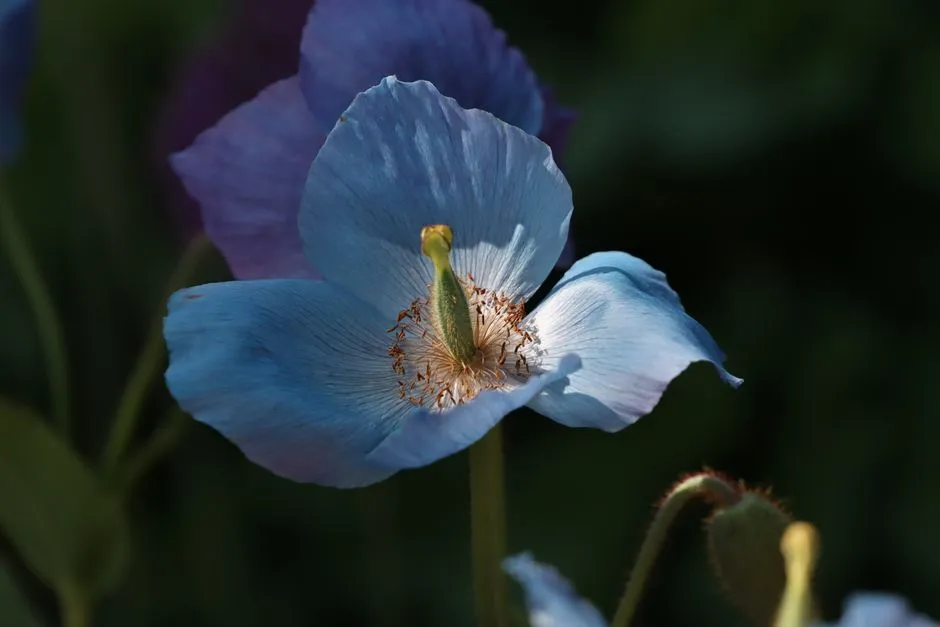
Start with a cool site and an identified plant
To grow Himalayan blue poppies, begin with a correctly identified Meconopsis species or hybrid and choose a cool, sheltered site with bright filtered light, humus-rich soil, reliable moisture, and drainage that prevents stagnant saturation. These plants generally struggle in hot, dry summers. Local climate fit matters more than a hardiness-zone number copied from a different taxon.
The guides in blue poppy care treat the label as the start of the research, not the end.
Confirm what you bought
“Himalayan blue poppy” is a common name applied to more than one Meconopsis taxon and to hybrids. Flower color, mature size, life cycle, hardiness, and willingness to persist vary. Keep the botanical name, supplier label, purchase date, and provenance when supplied.
Do not invent a cultivar name from flower color. If identity is uncertain, describe the plant as unidentified Meconopsis and avoid species-level promises.
These are ornamental plants, not ingredients. Do not ingest them, and prevent access by children or animals unless the exact plant’s safety has been verified through an appropriate authoritative source.
Choose cool light instead of deep darkness
Aim for protection from intense afternoon heat while maintaining enough light for sturdy growth and flowering. Open woodland edges, the cooler side of a wall, or high shade may work where air can move and roots remain cool.
Dense shade can reduce flowering and encourage weak growth; exposed sun can scorch foliage or dry the root zone in warm regions. Observe the site across the season. “Partial shade” on a label cannot see your reflected heat, wind, latitude, or neighboring tree.
Build moisture-retentive soil that still drains
Meconopsis generally favors soil rich in organic matter that holds even moisture without remaining waterlogged. Before planting, check what happens after rain or irrigation. Water should enter the soil rather than ponding around the crown.
Improve the whole planting area with mature organic matter appropriate to the existing soil instead of digging a small, soft pocket inside compacted ground. A pocket can behave like a buried bowl. On persistently wet or heavy sites, a raised position may be more honest than repeated rescue attempts.
Avoid prescribing a universal pH correction without a soil test and the requirements of the identified plant. Extreme amendments can cause new problems while solving an imaginary one.
Plant with minimal root disturbance
Plant during a cool, settled part of the local season when soil is workable and neither frozen nor heat-stressed. Handle the root ball carefully and set the crown at the same level it occupied in the container unless the supplier directs otherwise.
Water thoroughly after planting and mulch around, not against, the crown. Keep mulch depth moderate and inspect for slugs, snails, and trapped moisture. Use local, wildlife-conscious control guidance rather than improvising toxic bait where children or animals can reach it.
Keep moisture even through active growth
Check the soil below the surface with a finger or appropriate tool. Water deeply enough to moisten the root zone when it begins drying, then let excess drain. Fixed calendar watering ignores rainfall, soil texture, container size, wind, and plant stage.
Do not allow repeated wilting, but do not keep the crown in constant saturation. Hot dry wind can stress leaves even when the deeper soil remains moist; shelter and cooler siting may matter more than another splash.
The seven flowering checks separate moisture from heat, light, maturity, and identity. More diagnostic frameworks live in garden troubleshooting.
Feed modestly and record the season
Use a soil test or local horticultural guidance before major amendments. Excess nitrogen can promote soft leaf growth without solving climate or root problems. Organic mulch and healthy soil structure often matter more than frequent concentrated feeding.
Record emergence, leaf growth, heat events, irrigation, flowering, seed formation, and dieback. Some Meconopsis are short-lived or monocarpic while others can persist; treatment after flowering depends on identity and the goal of saving seed versus conserving a perennial crown.
Success is not merely buying a bluer flower. It is matching a known plant to a site where summer does not repeatedly send it eviction notices.